Digital Employee Advocacy in Enterprises

All enterprises I came across in MENA are keen to optimise their results on social marketing strategy through better content, optimised content workflows, localisation and many other smart ways that rely on more sustainable data sources resulting in more knowledge about users in Social CRMs  and more relevant content suggestions. At the end of this article I am suggesting a new way to reach quality audiences with brand messages.

Still today, organisation are fighting for the audience to get more reach of their content across the proprietary social platforms like Facebook, Twitter and Instagram. The natural evolution of social networks discriminates Brands that create content through Algorithms that make them pay in order to reach the consumers. As soon as enough users consume too much content on the channel, the platform creates a reach limiting algorithm and an ad sales team to override the same. These algorithms are beneficial for the relevance and therefore quality of the consumed content for the user, and improve the time the platform is consumed eventually.

Brands have been struggling creating relevant content, which is engaging enough to improve organic reach in social networks. Campaign value is low, because of the  low frequency of agencies “campaign based planning”, while a sustainable way to activate users would be more beneficial. 52 campaigns per year have been proven to be creating much higher average reach than quarterly big “activations” alongside a TV campaign.

Agencies and Brands feel the pain and move their activities to smaller but not limited platforms. Until recently for example Instagram was made popular as there was no algorithm, no ads, and just visual content to be produced while influencers can be paid off in bulk. All that changes, aside to the fact that the full reach on Instagram is probably less reach than the “algorithmed” organic reach on Facebook in several countries.

I stumbled across a way for brands to increase their reach in a conveniently controlled way, having an impact beyond only the social marketing department (which usually still has to justify its existence). Enterprises implementing employee advocacy programs into there digital strategy:

While the organic reach of a Brands post lies around 4%-6% on average, a consumer posting his on content has a much wider and less restricted organic reach of approximately 90% in his network. That means if your audience is 100 in total, a brands post will be seen by 4 persons, while a consumer share will result in 90 persons seeing this post. that is why it is so heavily promoted and appreciated that users share brands content.

What if this sharing process can be stipulated, institutionalised, controlled and tracked for these kind of influencers. What if this even allows to incentivise the proactive execution of   sharing in this closed environment? What if brands make use of the assets they are currently already using already for business success – their employees.

Just assume there is a controlled ecosystem in which the employees of big enterprises can access a centralised content pool to share from on a daily basis. Imagine that this content pool falls under the strict control and approval of the centralised content team in the organisation. On a daily basis the employees are encouraged and incentivised to share the provided and approved product information, offers, professional content, job vacancies or any other landing pages for conversions in their network. Incentives can be included in the HR department as an element of the compensation plan, additional holidays, loyalty program credits or other catalogue based internal benefits.

While the employees are actively involved in this already in northern European countries as far as I know, the fewest enterprises in MENA have even considered this kind of strategy, enabled though technology.

I would be glad if you prove me wrong and tell be where this is deployed already ?

Let me know.
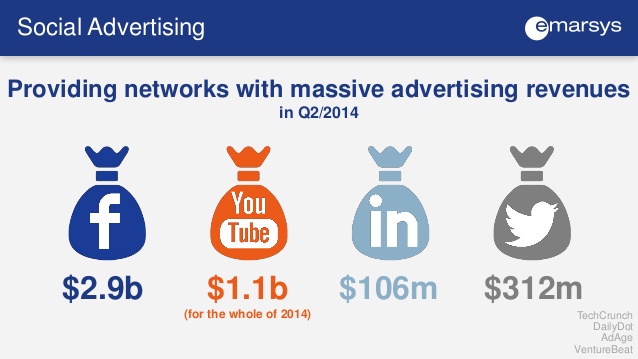


The revenue evolution of social networks

The past 4 years i have interacted with hundreds of Digital and Brand managers as well as with media planners and agency representatives. In our discussions we have interacted around social networks reach and audiences, social network preferences etc.

Around 2010, Facebook has grown to become ubiquitous globally. Millions of consumers signed up and shared content with each other. Brands & publishers jumped the bandwagon in order to produce content these users are supposed to engage with. The content each individual was unfiltered, based on the individuals Facebook friends and Brand “likes”. With a 100 friends and 100 Likes, each of the 200 sharing only one piece of content per day, the Facebook feed was cluttered with 200 unfiltered content pieces, no matter how (ir)relevant that piece of information is for the individual.

 Around 2012, the whole industry, as well as the consumers, have been confronted with the introduction of an algorithm based “Facebook feed clean up mechanism” called “Edge Rank”. This algorithm was supposed to filter content for the newsfeed based on relevance for the individual, as more users stay obviously on Facebook if the content is interesting/relevant to them.

This “Edge Rank algorithm” has been adapted several time and is not the topic of this article. Interesting enough it represents an important step in the ability to monetise social networks and has been replicated in other prominent cases over and over again. My assumption is that it will replicated for any social network mechanism.

Social Network growth phase

Any  social network is following pretty much the same phases of development from my experience. While market penetration happens through massive capital injections based on venture capital invested in technology backend and user acquisition, the target of this is to create a massive “installed user base” that evolves in reaching a critical mass of users. The massive growth, also stipulated through viral networking effects inherent to Social networks, will first lead to a gain of quality of the social network.

The virtuous and vicious critical mass

But with more contributors in the network, the consumed content will lack relevance as interests and taste as well as preferences for friends, content and brands are evolving over time. So the CN either cleans up or the users will leave the network as the content value decreases.  Every growing social network is facing this. Facebook has been through this at an earlier stage then others. They deployed an algorithm that filters out irrelevant content to keep individuals newsfeed relevant.

Revenues finally for social networks

A positive side effect is that it opens up the possibility no enrich the business model of the social network with an additional revenue source: If content is filtered by an algorithm, there will always be companies that will pay to override this mechanism in order to reach their audiences. Advertising revenues are skyrocketing, but brands start to complain that they have a very small organic reach that is limited more and more, while they have to allocate massive funds to paid reach advertising campaigns.

Brands nomading to “free” platforms

My clients and partners kept permanently emphasising the low organic reach they got out of Facebook then, which convinced them to move into other, just emerging, platforms like twitter and Instagram. Here they found all the “free” audience and reach, all of a sudden preferring activities here to promote to easier, less targeted and smaller audiences.

Then, as Twitter was emerging in user numbers, they announced an algorithm as well. And this is followed by a global rollout of self service advertising ability for the long tail advertising. Now one week ago Instagram has announced the same concept and all of the sudden Instagram is declared to be “dead for brands

It is just natural development, an evolutionary process from my perspective. I assume now it will have the implication that more brands move back to Facebook as all relevant channels have now algorithms – while Facebook still has a much more efficient targeting,  ore data and generally a much wider audience.

What do you think about this?


ROI considerations for Free2play (Mobile) Gaming

One of my earlier jobs was to manage a free2play gaming company in the Middle East. Over years, this gaming company was found in the alexa.com rankings in the top ten most visited pages in all the MENA countries. A tremendous success story, and funny enough an e-commerce website before e-commerce had even arrived. It showcased how performance Marketing can work in the middle east and the audience of this game created enough demand to purchase virtual gold online to create 2 payment companies still existing today.

Free2play is a model in which the overall consumption of a product tends to be free, while certain add ons and features are charged after the need for this particular service or feature is created. While first deployed in Browser games like Travian and in Massive Multiplayer online games MMOG- it eventually arrived on the mobile phones.

Millions of players are spending hours per day in mobile games that are based on this model. The leading company at this moment seems to be the Finnish developer “Supercell” with the apparently “most grossing” game called Clash of Clans.

Clash of Clans apple app game
Clash of Clans

This game generates globally 2 Million USD – Every Day. The clone of this game is named Clash of Kings, created by Chinese company Elex. They are not far behind on the revenue potential. Hundreds of game companies try to create games that create a lot of revenue. The game itself is only half the way from my perspective and experience. The companies making the real money are developing and publishing simultaneously. They control the acquisition cost and Life Time Value influencing parameters.

Mobile gaming success is not as abstract as it may seem on the first glance. Identify clients that will like your product, use it all the time and willing to buy complementary up-selling items. You work on making them happy and they give you loyalty and more revenues.

Continue reading “ROI considerations for Free2play (Mobile) Gaming”

Social Marketing in Enterprises

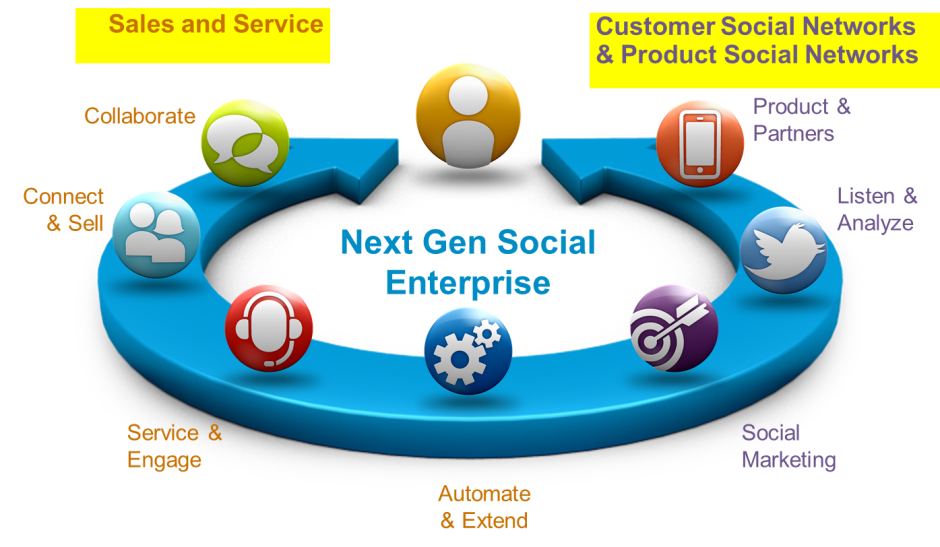
I have spent my past 4 years implementing social marketing technologies in Enterprises. Since few people have actually been confronted with the Software as a Service approach in Social Media I will describe first what Social marketing means and how Enterprises approach that topic.

Social Marketing covers various disciplines such as social ads, community moderation and publishing, engagement strategies, monitoring, reporting – also blending in with the utilisation of user data acquired through the adjacent digital strategy.

Many of these disciplines have been managed desperately by different teams and departments or agencies. While most of the work is or has been done manually, the rise of automation service going beyond the original platforms (Facebook, Instagram or Twitter etc.) has created an exploding industry of innovative start ups and established software houses hustling to serve a software solution to an environment that is permanently changing. Recently, the big and small vendors have been trying to tweak their software to enable an all in one approach, which consolidates the Data collected from all disciplines and makes it more actionable.

More social media channels that apparently grow more popular, combined with more features and functionalities in the channels and a variety of decentralised contributors are a big challenge for enterprises that qualify as such by their size of operating various B2C brands in various markets.

Enterprises can be conglomerates of Brands acquired by Holdings such as MAF, Chalhoub Group, Azalea, Al Shaya or could be Retail and FMCG giants such as P&G, A mobile operator Group like Etisalat or Landmark and Apparel. Even a big Creative agency with many clients could be considered an enterprise.

For these companies the complexity is multiplied because they have to manage the above for maybe 50+ different brands, on Facebook, Twitter, Instagram, youtube – together probably with an in-house team or a network of agencies. From my experience most prefer to outsource the work (or risk!?) to a variety of agencies (read also the the post on the holy trinity of agencies.) Recently very few of these enterprises have decided to retain all of the disciplines of social marketing in-house.

While the size of the enterprises operations in social marketing is a big challenge, it has also major opportunities. If the enterprise manages to consolidate all the data from all brands (and all stakeholders of the disciplines) in a centralised actionable social CRM  – the sheer size of actionable data will allow to identify and cluster consumers across brands. Based on this a high level of personalised communication can be executed and media budget efficiently allocated.

I would be happy to hear your thoughts on this!


Separate the holy trinity of Agencies.

For years I have worked with agencies and brands simultaneously, mainly on the optimisation of the brands social marketing efforts which should be supported by the brands agency of choice.

In the second I ask a brand manager “Who is you agency?”, a large proportion of Brands consider their Media agency to be their agency. I always assume that truth is derived from the fact that the biggest absolute numbers of Budget in the Marketing department is spent on Media, while the lower absolute numbers of the budget are saved for creative and PR.

My understanding grew that  the media agency spends the money in the way they deem it best allocated at their or the clients key performance indicator, while the rest such as creating social microsites or landing pages, storing data in a social CRM and making use of that in retargeting is left in the oblivion, managing the community is left to the PR agency who is usually not 100% involved in the activation plan or media plan. Still, PR agencies that manage communities on the other hand are spending media budget as well on Promoting content posts.

So because Media is the most budget it gets the lead on an account, while PR manages the community and Creative the deliverables for the posts and ads probably. In an ideal world, all involved parties would exchange information and learnings for the sake of the success of the Brand they mutually cater to. But in all the years I worked in this environment I have rarely seen a beneficial cooperation because each of these contributors have their own agenda for revenue maximisation and only a low incentive for successful interaction in-between each other.

Technically this lack of data transparency and access can be solved through intelligent software. All three parties make use of a unified system that creates accessible data and makes it available in the first step to the Brand client but also to the other parties where relevant. This works for the situation of Brand and 3 Agencies, even in the scenario in which the brand decides to execute creative, media and PR in house.

I find it interesting that now today several agencies tend to internalise the other functionalities to be able to do all of the 3 functions, while knowingly competing with their sister agency. A creative agency that does also do Page management and Media budget allocation is competing with the sister media agency that adds a creative layer to the existing media buying service and communication management.

I would be happy to hear your opinion on this!?

Performance tracking for conversions

I came into the Middle East already several years ago, even before I started managing the probably biggest gaming companies activities in the Arab world. While I was working in a company that manages the billing of consumers of online games all around the world, I learned how the games companies applied a very scalable model of performance based marketing.

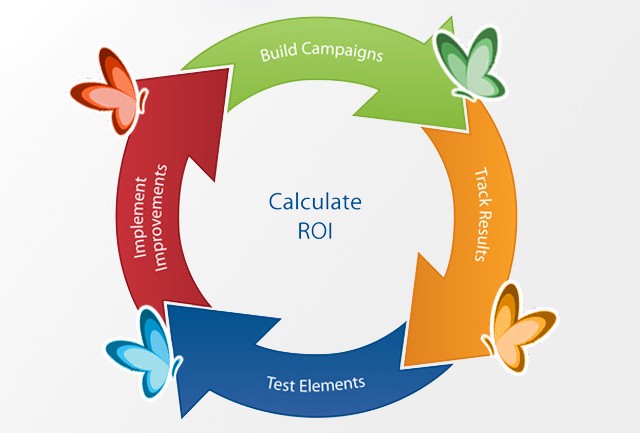
Understanding the isolated ROI of an additional unit of investment in online advertising should be the basis to identify which form or channel of advertising is actually the most efficient. Several parameters have influence on the efficiency of budget allocation. To list a few the could be

  • Creatives: the imagery and composition of the visual “banner”.
  • Copy text: a proper and convincing call to action.
  • Channel: On which kind of digital platform or channel is the user confronted.
  • Landing page: Where a user is taken when he clicks – the place to convert.

All these parameters are to be iterated in a way that for each of the parameters the best combination can be found. All of that requires the ability to track the user journey and consolidate the ROI for each individual combination:

Example: a gaming company might have 5 different creatives combined with 5 different “calls to action”.These 25 creative/copy iterations will then be inserted into 5  channels; let us say a sports page, fashion, news and so on. We need to consider that these 25 ads run now on 5 isolated channels and for each of the channels you will probably have different cost booking your ads in. Then you combine the 125 iterations of your message with various iterations of Landing pages. On these landing pages the actual conversion may take place. This could be a sale, a signup for a newsletter, a download maybe. the succesful conversion results in an “action”. If you iterate the 125 parameter combinations with 5 different landing pages a total of 625 versions will allow you to identify the most efficient cost per action (CPA).

Common mistake: An e-commerce executing this ongoing process of optimisation often thinks it is well of choosing the iteration that has the lowest CPA. I have also seen though that this can be deceiving to look only at the lowest CPA. Eventually you also need to analyse the tracked (future) revenues of the individual users, understanding that you shall not compare the CPA to the next purchase but to all future purchases from that particular (group of) clients. The sweet spot for a conversion based business model is where the “delta” of the CPA and the “Life Time Value” of a certain channel is maximised.

Finding this sweet spot is the challenge to master during the piloting phase, before actually budgets are to be scaled up. Still, do not forget that further parameters may also play a role, and that channel costs may change or that the audience on different channels may not be indefinite.

I would love to hear your thoughts on this. Please comment!


Just another digital Blog?

I work in the Middle East`s digital landscape for more than ten years. Mobile Payment, Online Gaming, Performance  Marketing

In all of these years I have met extraordinary personalities, saw great success and painful failures. On a daily basis I see and hear fantastic and exciting news about digital

Today I decided to work on my writing, spit out some thoughts and would embrace anyone that decides to challenge or support my thoughts.

There we go!