The past 4 years i have interacted with hundreds of Digital and Brand managers as well as with media planners and agency representatives. In our discussions we have interacted around social networks reach and audiences, social network preferences etc.
Around 2010, Facebook has grown to become ubiquitous globally. Millions of consumers signed up and shared content with each other. Brands & publishers jumped the bandwagon in order to produce content these users are supposed to engage with. The content each individual was unfiltered, based on the individuals Facebook friends and Brand “likes”. With a 100 friends and 100 Likes, each of the 200 sharing only one piece of content per day, the Facebook feed was cluttered with 200 unfiltered content pieces, no matter how (ir)relevant that piece of information is for the individual.
Around 2012, the whole industry, as well as the consumers, have been confronted with the introduction of an algorithm based “Facebook feed clean up mechanism” called “Edge Rank”. This algorithm was supposed to filter content for the newsfeed based on relevance for the individual, as more users stay obviously on Facebook if the content is interesting/relevant to them.
This “Edge Rank algorithm” has been adapted several time and is not the topic of this article. Interesting enough it represents an important step in the ability to monetise social networks and has been replicated in other prominent cases over and over again. My assumption is that it will replicated for any social network mechanism.
Social Network growth phase
Any social network is following pretty much the same phases of development from my experience. While market penetration happens through massive capital injections based on venture capital invested in technology backend and user acquisition, the target of this is to create a massive “installed user base” that evolves in reaching a critical mass of users. The massive growth, also stipulated through viral networking effects inherent to Social networks, will first lead to a gain of quality of the social network.
The virtuous and vicious critical mass
But with more contributors in the network, the consumed content will lack relevance as interests and taste as well as preferences for friends, content and brands are evolving over time. So the CN either cleans up or the users will leave the network as the content value decreases. Every growing social network is facing this. Facebook has been through this at an earlier stage then others. They deployed an algorithm that filters out irrelevant content to keep individuals newsfeed relevant.
Revenues finally for social networks
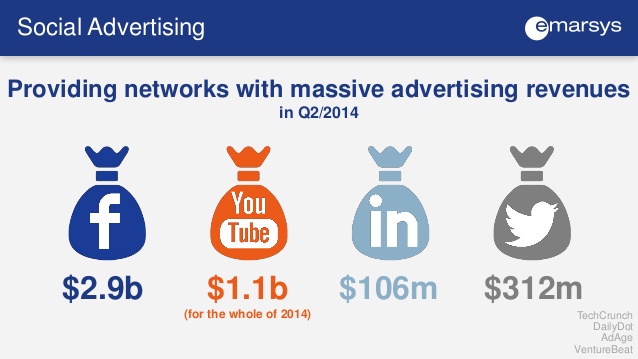
A positive side effect is that it opens up the possibility no enrich the business model of the social network with an additional revenue source: If content is filtered by an algorithm, there will always be companies that will pay to override this mechanism in order to reach their audiences. Advertising revenues are skyrocketing, but brands start to complain that they have a very small organic reach that is limited more and more, while they have to allocate massive funds to paid reach advertising campaigns.
Brands nomading to “free” platforms
My clients and partners kept permanently emphasising the low organic reach they got out of Facebook then, which convinced them to move into other, just emerging, platforms like twitter and Instagram. Here they found all the “free” audience and reach, all of a sudden preferring activities here to promote to easier, less targeted and smaller audiences.
Then, as Twitter was emerging in user numbers, they announced an algorithm as well. And this is followed by a global rollout of self service advertising ability for the long tail advertising. Now one week ago Instagram has announced the same concept and all of the sudden Instagram is declared to be “dead for brands”
It is just natural development, an evolutionary process from my perspective. I assume now it will have the implication that more brands move back to Facebook as all relevant channels have now algorithms – while Facebook still has a much more efficient targeting, ore data and generally a much wider audience.
What do you think about this?





 monetizur.com